Introduction
In today’s data-driven world, managing and analyzing large datasets efficiently is critical. Python has become one of the most popular languages for data analysis due to its simplicity and powerful libraries.
However, building and managing data analysis pipelines manually can be time-consuming. This is where AI tools for automating Python data analysis pipelines come in.
These tools simplify repetitive tasks, reduce errors, and allow data scientists and analysts to focus on insights rather than coding routine processes.
In this article, we explore the top tools, their benefits, and how they can enhance Python data analysis workflows.
What Are Python Data Analysis Pipelines?

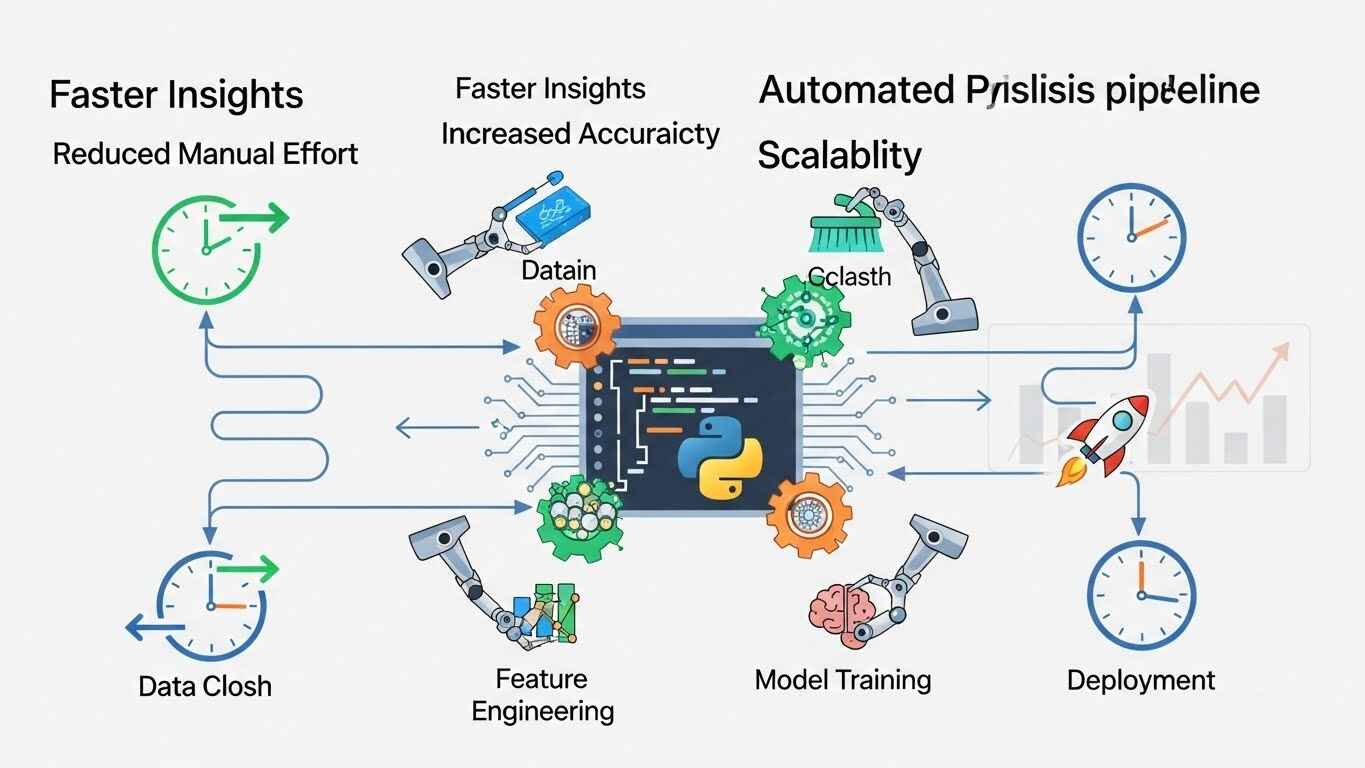
A Python data analysis pipeline is a structured workflow that takes raw data and processes it through various steps to generate insights. These steps typically include:
- Data collection
- Data cleaning and preprocessing
- Feature engineering
- Statistical analysis or modeling
- Visualization and reporting
By automating these steps using AI tools, teams can improve efficiency, reduce manual errors, and ensure consistency across projects.
Why Use AI Tools for Automating Python Data Analysis Pipelines?
Manual data analysis can be slow, especially when handling large datasets or repetitive tasks. Here are some key reasons to use AI tools for automating Python data analysis pipelines:
- Time Efficiency: Automate repetitive tasks to save hours of manual work.
- Consistency: Reduce errors and maintain standardized workflows.
- Scalability: Handle large datasets without slowing down processes.
- Enhanced Insights: AI can suggest patterns or trends that may be overlooked manually.
- Integration: Seamlessly connect with other tools or databases to streamline operations.
Using AI tools ensures that your data analysis pipelines are not only faster but also more reliable and scalable.
Top AI Tools for Automating Python Data Analysis Pipelines
Several AI tools are available to help automate Python data workflows. These tools range from open-source libraries to advanced AI platforms. Some of the most popular include:
1. PandasAI
PandasAI extends the popular Pandas library with AI-driven automation. It can:
- Automate data cleaning tasks
- Suggest transformations
- Generate visualizations based on dataset patterns
This makes it a powerful tool for streamlining data analysis pipelines while maintaining Python’s flexibility.
2. DataRobot
DataRobot is an AI platform that can automate end-to-end data analysis. Key features include:
- Automated feature engineering
- Model selection and evaluation
- Deployment-ready insights
DataRobot reduces the manual workload for Python users, allowing data scientists to focus on strategic analysis.
3. PyCaret
PyCaret is an open-source Python library for machine learning automation. It helps:
- Prepare datasets for modeling
- Compare multiple models quickly
- Automate evaluation and tuning
By integrating PyCaret into Python pipelines, teams can save time on model building and focus on actionable insights.
4. Apache Airflow with AI Integrations
Apache Airflow is a workflow management tool that can orchestrate Python data pipelines. When combined with AI modules, it can:
- Schedule automated tasks
- Monitor pipeline performance
- Trigger alerts for anomalies
This ensures smooth execution of Python data analysis pipelines with minimal manual intervention.
5. H2O.ai
H2O.ai is a popular AI platform for automating machine learning workflows. In Python pipelines, it can:
- Preprocess data automatically
- Build predictive models
- Generate interpretable reports
H2O.ai is ideal for teams looking to automate both analysis and predictive modeling in Python.
Benefits of Automating Python Data Analysis Pipelines
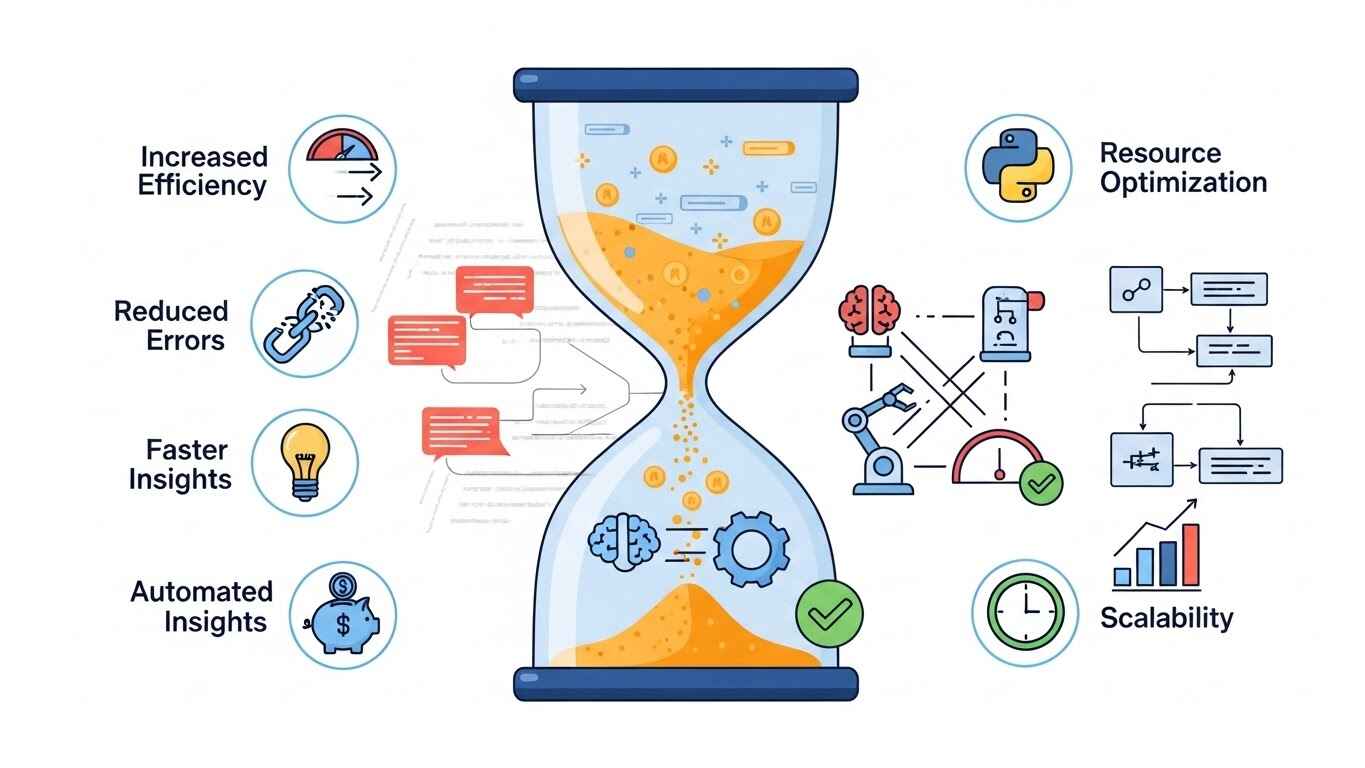
Using AI tools for automating Python data analysis pipelines comes with several benefits for businesses and individual analysts:
1. Reduced Manual Effort
Automation eliminates repetitive tasks such as cleaning data, checking for missing values, or formatting columns.
2. Faster Insights
With AI-driven tools, data processing and analysis are faster, allowing decisions to be made more quickly.
3. Improved Accuracy
Automation reduces the risk of human error, ensuring more reliable results.
4. Scalable Solutions
AI tools can handle growing datasets efficiently, which is critical for organizations with expanding data needs.
5. Better Collaboration
Automated pipelines can be shared across teams, ensuring that everyone follows the same process and produces consistent outputs.
Key Steps to Implement AI Tools in Python Data Analysis Pipelines
To successfully implement AI tools for automating Python data analysis pipelines, follow these steps:
- Identify Repetitive Tasks: Determine which steps in your pipeline are repetitive and suitable for automation.
- Select the Right AI Tool: Choose tools that integrate well with your Python environment and pipeline requirements.
- Prepare Your Data: Ensure your datasets are structured and clean to maximize the efficiency of AI tools.
- Integrate and Test: Implement the tools in your pipeline and test them for accuracy and performance.
- Monitor and Optimize: Regularly check the pipeline performance and update AI models or workflows as needed.
Following these steps ensures smooth automation and maximizes the benefits of AI-driven pipelines.
Conclusion:
In summary, AI tools for automating Python data analysis pipelines are transforming how data is processed, analyzed, and interpreted. They save time, reduce errors, improve scalability, and enable data-driven decision-making.
Whether you are a data scientist, analyst, or business professional, integrating AI tools into your Python workflows can significantly enhance productivity and insights.
By choosing the right tools, following best practices, and staying updated with the latest AI trends, you can build efficient, automated pipelines that deliver consistent results.
The adoption of AI in Python data analysis is not just a trend—it’s the future of smarter, faster, and more reliable data insights.





Leave a Reply