Introduction
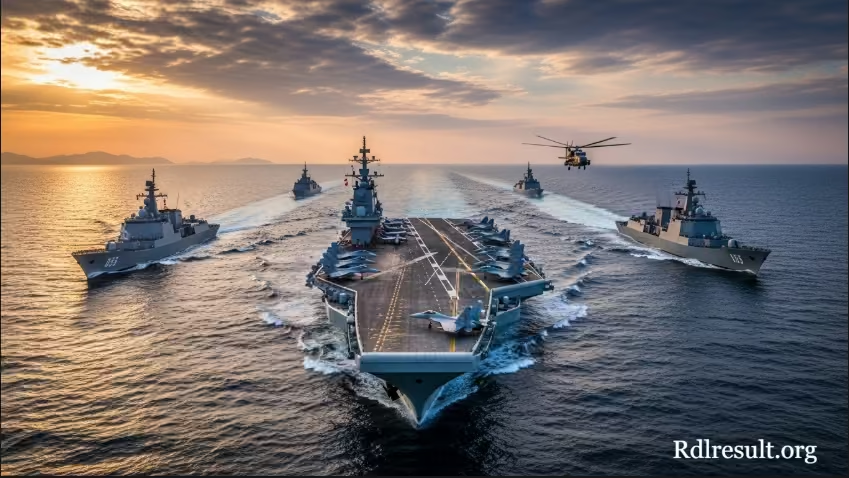
China’s growing aircraft carrier fleet has become one of the most discussed topics in global defense and geopolitical circles.
As the country continues to expand its naval power, understanding the progress, strategy, and future goals behind China’s growing aircraft carrier fleet is important for anyone interested in world affairs.
This guide explains how China is building its carrier force, why it matters, and what the future may look like.
Introduction to China’s Growing Aircraft Carrier Fleet
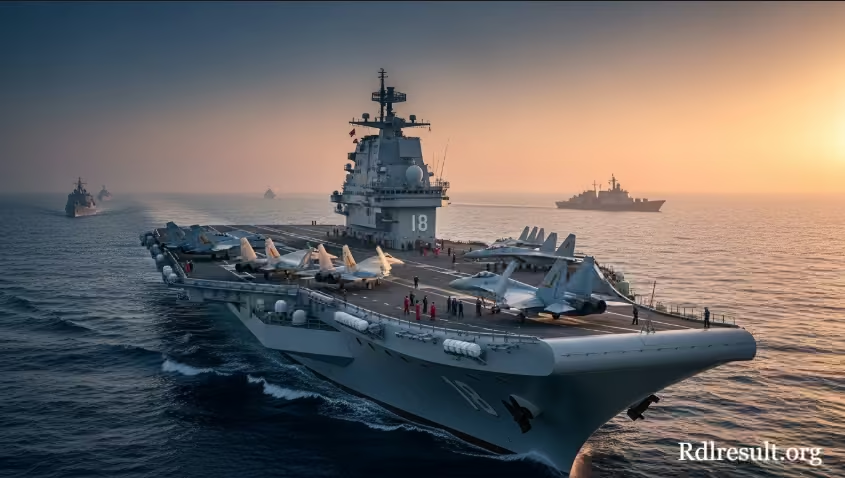
China’s growing aircraft carrier fleet is a major symbol of the country’s expanding military strength. Only a few decades ago, China had no aircraft carriers at all.
Today, it is quickly becoming one of the world’s most powerful naval forces. This rapid growth shows China’s ambition to protect its interests, secure trade routes, and increase its global influence.
History Behind China’s Growing Aircraft Carrier Fleet
Early Stages of Development
The journey of China’s growing aircraft carrier fleet began with the purchase of an old Soviet carrier, the Varyag, in the late 1990s. China rebuilt and upgraded it, eventually commissioning it as the Liaoning, the country’s first aircraft carrier.
A Strategic Turning Point
The introduction of the Liaoning marked a turning point. It allowed China to train pilots, develop carrier operations, and improve naval skills.
This laid the foundation for what would become one of the fastest expansions of an aircraft carrier fleet in modern history.
Key Carriers in China’s Growing Aircraft Carrier Fleet
1. Liaoning (Type 001)
The Liaoning is the first and most symbolic addition to China’s growing aircraft carrier fleet. It mainly serves as a training and testing platform.
Although its capabilities are not as advanced as modern carriers, it helped China understand the basics of carrier-based aviation.
2. Shandong (Type 002)
The Shandong is the first fully home-built carrier in China’s growing aircraft carrier fleet. Launched in 2017, it proved China’s ability to design and build large, complex warships without relying on foreign technology.
It has improved aircraft capacity, upgraded systems, and better facilities compared to the Liaoning.
3. Fujian (Type 003)
The Fujian is considered a major leap forward in China’s growing aircraft carrier fleet. It features electromagnetic catapults similar to those used by advanced navies.
This allows aircraft to take off with heavier loads, improving performance and increasing mission range. The Fujian represents China’s growing push toward high-technology naval warfare.
Technology Advancements in China’s Growing Aircraft Carrier Fleet
Improved Aircraft Launch Systems
The biggest technological shift in China’s growing aircraft carrier fleet is the move from ski-jump ramps to electromagnetic catapult systems.
This change allows more types of aircraft—including heavier ones—to be launched efficiently.
Stronger Air Wings
China is also developing advanced aircraft for its carriers, including stealth fighter jets. These new planes will increase the effectiveness of China’s growing aircraft carrier fleet.
Modern Radar and Defense Systems
With each new carrier, China adds stronger radar, sensors, and missile defenses. These technologies help detect threats early and protect the carrier group during missions.
Strategic Importance of China’s Growing Aircraft Carrier Fleet
Protecting Sea Routes
China depends heavily on sea trade, especially for oil and exports. The goal behind China’s growing aircraft carrier fleet is to secure these important sea routes and ensure uninterrupted trade.
Increasing Regional Influence
The fleet allows China to project power far beyond its shores. This is especially important in regions like the South China Sea, East China Sea, and the Indian Ocean.
With more carriers, China aims to strengthen its influence in these areas.
Competing with Global Powers
China’s growing aircraft carrier fleet is also seen as an effort to keep up with global naval powers, especially the United States. While China’s fleet is still smaller, it is expanding at a fast pace.
How China’s Growing Aircraft Carrier Fleet Affects Global Politics
Rising Military Competition
As China grows its naval capabilities, other countries in Asia and beyond are monitoring the situation closely. The fleet increases competition and may encourage other nations to expand their own military forces.
Changing Power Balance
China’s growing aircraft carrier fleet changes the balance of power in the Indo-Pacific region. Countries like Japan, India, and Australia are adjusting their defense strategies in response.
Impact on International Alliances
For many countries, China’s rising naval power affects diplomatic decisions. Alliances may shift, and partnerships may become stronger as nations seek stability in the region.
Training and Development Behind China’s Growing Aircraft Carrier Fleet
Building carriers is just one part of the process. China also needs skilled pilots, engineers, and naval crews.
Pilot Training Programs
Special programs train pilots to land and take off from carriers—one of the most difficult skills in military aviation. Over time, China has greatly improved these training systems.
Carrier Group Operations
A carrier does not operate alone. China’s growing aircraft carrier fleet includes destroyers, submarines, supply ships, and support vessels. Training entire carrier groups is a major focus for the Chinese navy.
Expanding Naval Infrastructure
New naval bases, shipyards, and port facilities have been built to support China’s growing aircraft carrier fleet. This infrastructure shows long-term commitment to carrier expansion.
Economic Impacts of China’s Growing Aircraft Carrier Fleet
Boosting the Shipbuilding Industry
China is already one of the world’s largest shipbuilders. Carrier construction brings jobs, innovation, and growth to this industry.
Encouraging Technological Development
Developing carriers requires new technology. This pushes China to invest in engineering, military science, and advanced manufacturing.
Long-Term Budget Growth
Maintaining China’s growing aircraft carrier fleet requires significant funding. China continues to increase its defense budget to support this expansion.
Conclusion:
China’s growing aircraft carrier fleet is transforming the country’s military power and global influence. From the Liaoning to the Fujian, each new carrier shows China’s commitment to becoming a major naval force.
As China continues to expand and modernize its fleet, the world watches closely. Whether for security, politics, or technology, the growth of China’s aircraft carriers will continue to shape global dynamics for years to come.





Leave a Reply