Introduction
Testing your computer’s performance is essential if you want smooth gaming, video editing, 3D modeling, or simple everyday use. Running a GPU stress test, GPU test, PC stress test, CPU stress test, or a full stress test PC setup helps you understand how strong, stable, and reliable your system truly is.
This guide explains everything in a clear and simple way, even for beginners.
What Is a GPU Stress Test?
A GPU stress test is a performance test designed to push your graphics card to its maximum limit. The purpose of the GPU stress test is to check:
- How well your GPU performs under pressure
- Whether it stays stable during heavy tasks
- If the GPU temperature stays within safe levels
- Whether there are any crashes, freezes, or performance issues
A proper GPU stress test helps you detect problems early and optimize your system for gaming or creative workloads.
Why You Should Perform a GPU Test
Running a GPU test is important for many reasons. It allows users to:
- Measure real-time performance
- Identify overheating issues
- Detect driver or hardware faults
- Compare GPU performance after upgrades
- Check if your GPU can handle demanding games
Whether you’re a gamer, designer, streamer, or just curious about your PC’s capabilities, a GPU test helps you understand the true power of your graphics card.
What Is a CPU Stress Test?
A CPU stress test pushes your processor to full usage to check stability and performance. During a CPU stress test, all CPU cores are used at 100% to reveal:
- Heating issues
- Performance drops
- Power delivery problems
- Hardware limitations
This helps ensure your PC can handle multitasking, gaming, rendering, and software development.
Why a CPU Stress Test Is Important
Running a CPU stress test helps you:
- Verify CPU temperatures
- Identify cooling problems
- Confirm system stability
- Ensure smooth performance during heavy tasks
If you plan to upgrade your PC, overclock your processor, or build a new system, a CPU stress test is always recommended.
Signs You Need a CPU Stress Test
You may need a CPU stress test if you experience:
- Sudden shutdowns
- High processor temperatures
- Slow response times
- Crashes while multitasking
- Poor performance in games or apps
A stress test can point out the root cause.
Why Stress Test PC Systems?
When you stress test PC components, you get a full health report of your device. This process is helpful for:
- Building a new PC
- Overclocking components
- Fixing performance issues
- Checking stability after hardware upgrades
- Ensuring safe temperatures under load
A stress test PC routine ensures your computer is stable, smooth, and reliable.
When Should You Stress Test a PC?
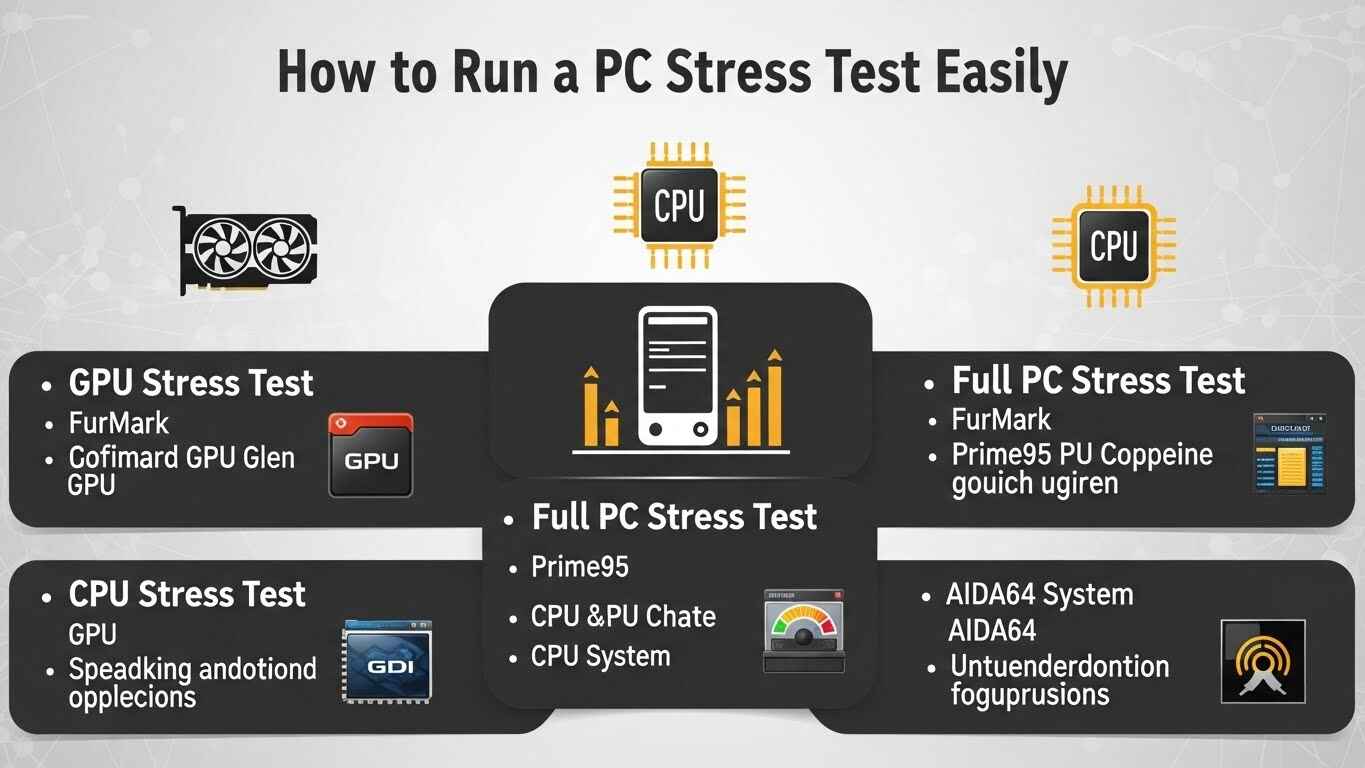
You should run a PC stress test if:
- You installed a new GPU or CPU
- You modified cooling or airflow
- You updated BIOS or drivers
- Your PC feels slower than usual
- You plan to overclock
- You want to check system reliability
A stress test PC setup is especially important for gaming PCs and high-performance workstations.
How to Prepare Your System for Stress Testing
Before running a GPU stress test, GPU test, CPU stress test, or PC stress test, follow these steps:
1. Clean Your PC
Dust can increase temperatures.
2. Check Cooling
Make sure fans and thermal paste are in good condition.
3. Close All Background Programs
This ensures accurate testing results.
4. Monitor System Temperatures
Use temperature monitoring tools to stay safe.
5. Know Safe Temperature Limits
Both GPU and CPU have maximum safe ranges.
Preparation ensures your stress test PC process is safe and successful
What Happens During a Stress Test?
When you run a GPU stress test or CPU stress test, your PC experiences:
- High temperatures
- Maximum power usage
- Full core or GPU load
- Continuous graphics rendering
- Heavy computational tasks
The goal is to observe how your PC reacts under maximum stress.
Common Problems Revealed by Stress Tests
A GPU test, CPU test, or PC stress test may reveal:
1. Overheating
This is the most common problem in older PCs.
2. System Crashes
Indicates unstable hardware or software.
3. Performance Drops
May point to thermal throttling.
4. Loud Fan Noise
Shows your cooling system is overworking.
5. Power Supply Issues
The PSU may fail under high load.
A stress test PC process makes these issues easy to spot.
How Long Should You Run a Stress Test?
The length of your GPU stress test, CPU stress test, or PC stress test depends on your goals:
Short Test (5–10 minutes)
Quick checks for temperature and performance.
Medium Test (30 minutes)
Useful for measuring stability.
Long Test (1–2 hours)
Best for overclockers and professional users.
A longer stress test PC process ensures full stability.
Is Stress Testing Safe?
A GPU stress test, CPU stress test, or PC stress test is generally safe if you monitor temperatures. Here are some safety tips:
- Stop the test if temperatures exceed safe limits
- Ensure your PC has fresh thermal paste
- Keep your environment cool
- Clean your fans and vents
When done properly, a stress test PC routine will not harm your system.
Benefits of Running Regular PC Stress Tests
Running regular PC stress tests gives you the following benefits:
- Improved performance
- Early detection of failing hardware
- Better cooling efficiency
- More stable gaming experience
- Longer PC lifespan
A complete GPU test, CPU test, and PC stress test keeps your computer healthy.
Conclusion:
Running a GPU stress test, GPU test, CPU stress test, PC stress test, or complete stress test PC procedure is one of the smartest things you can do to maintain your computer’s health.
Whether you use your PC for gaming, designing, studying, or everyday tasks, stress testing helps you identify issues early and enjoy stable performance.
By performing these tests regularly and monitoring system temperatures, you can ensure your computer stays fast, safe, and reliable for years.




Leave a Reply