Introduction
Smartphones work best when apps are updated regularly. If your apps keep crashing, running slow, or missing new features, you might not be updating them on time.
Learning how to update the apps on Android is simple, but many users still get confused about automatic updates, manual updates, and update settings.
This detailed guide explains everything you need to know about how to update the apps on Android, why updates matter, and how you can keep your device running smoothly.
What Does It Mean to Update Apps on Android?
Before learning how to update the apps on Android, it is important to understand what an update actually does.
When app developers improve an app, fix bugs, or add new features, they release an updated version. Installing this version replaces the older one on your phone.
Updating apps helps keep your device:
- Faster
- Safer
- More stable
- Full of new features
Now, let’s understand how to update apps easily.
Why Updating Apps Is Important
Understanding how to update the apps on Android is essential because updates offer many benefits:
1. Better Performance
Updated apps run smoother and faster. Developers fix issues that slow down the app.
2. Security Improvements
Updates protect your phone from viruses, hacking, and security risks.
3. New Features
Most apps introduce new features or design changes in updates.
4. Bug Fixes
If an app freezes or crashes, the update usually solves the problem.
5. Compatibility
Updates help apps work better with the latest Android version.
Now that you know the importance, let’s move to the main steps on how to update the apps on Android.
How to Update the Apps on Android Using the Play Store
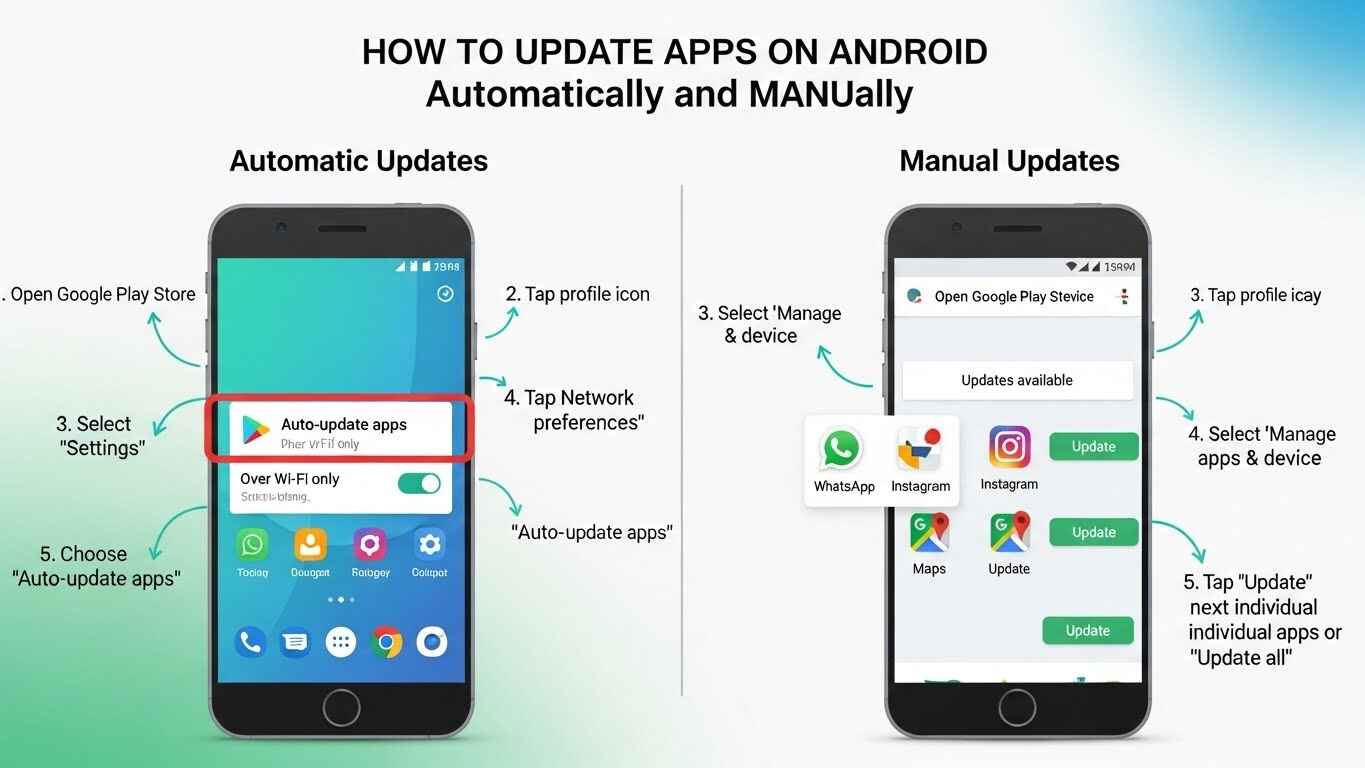
The most common and easiest method to update apps is through the Google Play Store. Here is how to update the apps on Android step by step.
Step 1: Open Google Play Store
Find the Play Store icon on your phone and tap to open it.
Step 2: Tap Your Profile Icon
This is usually located in the top right corner.
Step 3: Select “Manage apps and device”
This option shows you all your apps and updates.
Step 4: Tap “Updates available”
Here you will see all the apps that need an update.
Step 5: Choose the Update Option
You can either:
- Tap Update all to update everything
- Tap Update next to each app individually
These simple steps fully explain how to update the apps on Android using the Play Store.
How to Update the Apps on Android Automatically
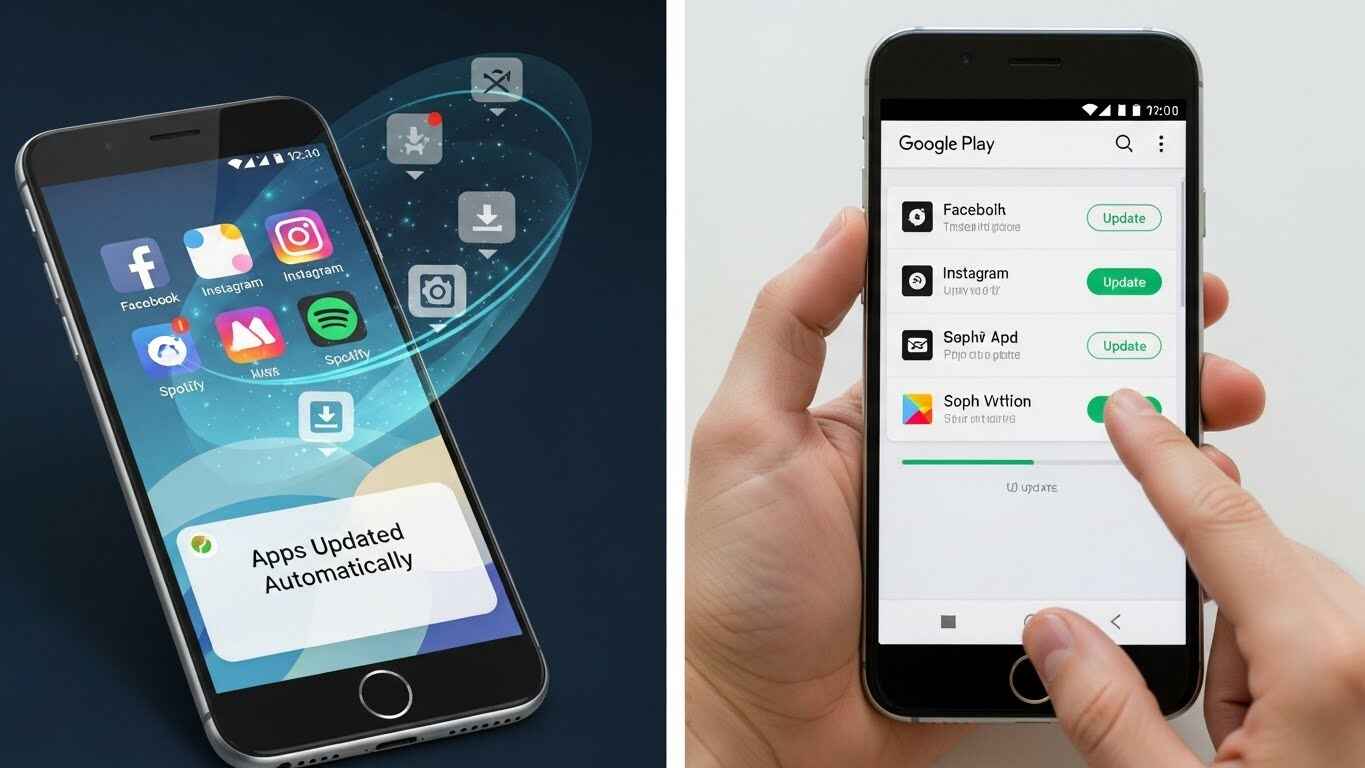
If you do not want to update apps manually every time, Android allows automatic updates. This is helpful for users who want updated apps without checking the Play Store often.
Here is how to update the apps on Android automatically:
Step 1: Open Google Play Store
Launch the Play Store on your device.
Step 2: Open Profile Menu
Tap your profile picture on the top right.
Step 3: Go to “Settings”
Open the settings section to manage update options.
Step 4: Tap “Network preferences”
This category contains data and download settings.
Step 5: Select “Auto-update apps”
Choose one of these options:
- Over Wi-Fi only
- Over any network
- Don’t auto-update
This completes the process of how to update the apps on Android automatically.
How to Update the Apps on Android Without Play Store
Some apps are downloaded from other sources (APK files). These do not update through the Play Store.
Here is how to update the apps on Android without using the Play Store:
1. Visit the app’s official website
Most apps have an official site where you can download the latest version.
2. Download the updated APK file
This file contains the newest version of the app.
3. Install the update
Tap on the downloaded file and install it.
4. Enable “Install unknown apps” if needed
Your device may ask you to allow installation from external sources.
This method is helpful if you use apps that are not available in the Play Store.
How to Update the Apps on Android for Better Storage Management
Many users avoid updates because they feel updates take too much storage. Here is how to manage it:
1. Delete cached data
Clearing cache frees up space and supports updating apps.
2. Uninstall apps you don’t use
This makes room for newer versions.
3. Move files to SD card
Photos, videos, and documents can be shifted to external storage.
4. Use “Lite” app versions
These use less storage and update easily.
Proper storage management makes updating apps smooth and fast.
Why Some Apps Don’t Update Automatically
Sometimes, even if auto-update is enabled, apps still won’t update. If you want to understand how to update the apps on Android without problems, here are some possible reasons:
- Low storage
- Poor internet connection
- Auto-update disabled for specific apps
- Play Store bugs
- Device battery saver mode
- Outdated Android version
Fixing these issues helps updates work normally.
How to Update the Apps on Android After a System Update
After updating your Android system, some apps may not work properly until updated. Here’s what to do:
- Open Play Store
- Go to “Updates available”
- Update all apps
- Restart your phone
This ensures your apps are compatible with the new system version.
How to Update the Apps on Android Safely
Safety is important while updating apps. Here are simple safety tips:
- Update apps only from trusted sources
- Avoid third-party websites unless they are official
- Check app permissions after updating
- Keep your phone’s security settings on
Following these steps keeps your device safe and updated.
How Often Should You Update Your Apps?
Most users wonder how often apps should be updated. Here’s what experts recommend:
- At least once a week
- Automatically if possible
- Immediately when security updates appear
This is why knowing how to update the apps on Android is essential for every smartphone user.
These quick solutions help you complete updates smoothly.
Conclusion:
Understanding how to update the apps on Android is important for keeping your device fast, secure, and full of the latest features. Whether you choose automatic or manual updates, keeping apps updated will improve your smartphone experience.
With the steps and tips in this guide, you can update your apps easily, solve common issues, and enjoy a smoother Android experience every day.





Leave a Reply