Introduction
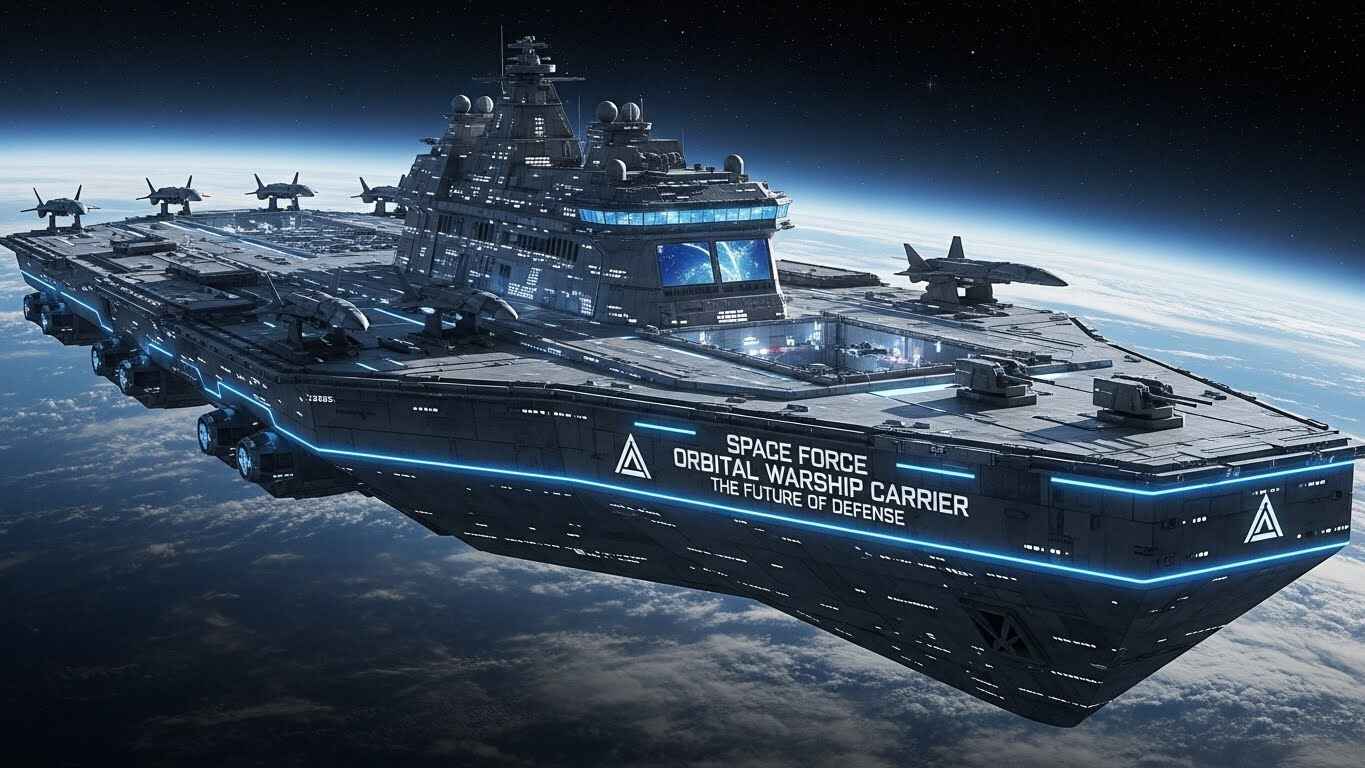
A Space Force Orbital Warship Carrier is a large spacecraft designed to carry smaller ships, drones, weapons, and defense systems into orbit.
It is basically a floating military base in space. Unlike traditional warships on Earth, these carriers operate outside the atmosphere, giving nations control over space areas that are becoming more important every year.
The concept may sound futuristic, but it is slowly becoming more realistic as space agencies and militaries invest in advanced technologies.
Why the Space Force Orbital Warship Carrier Matters
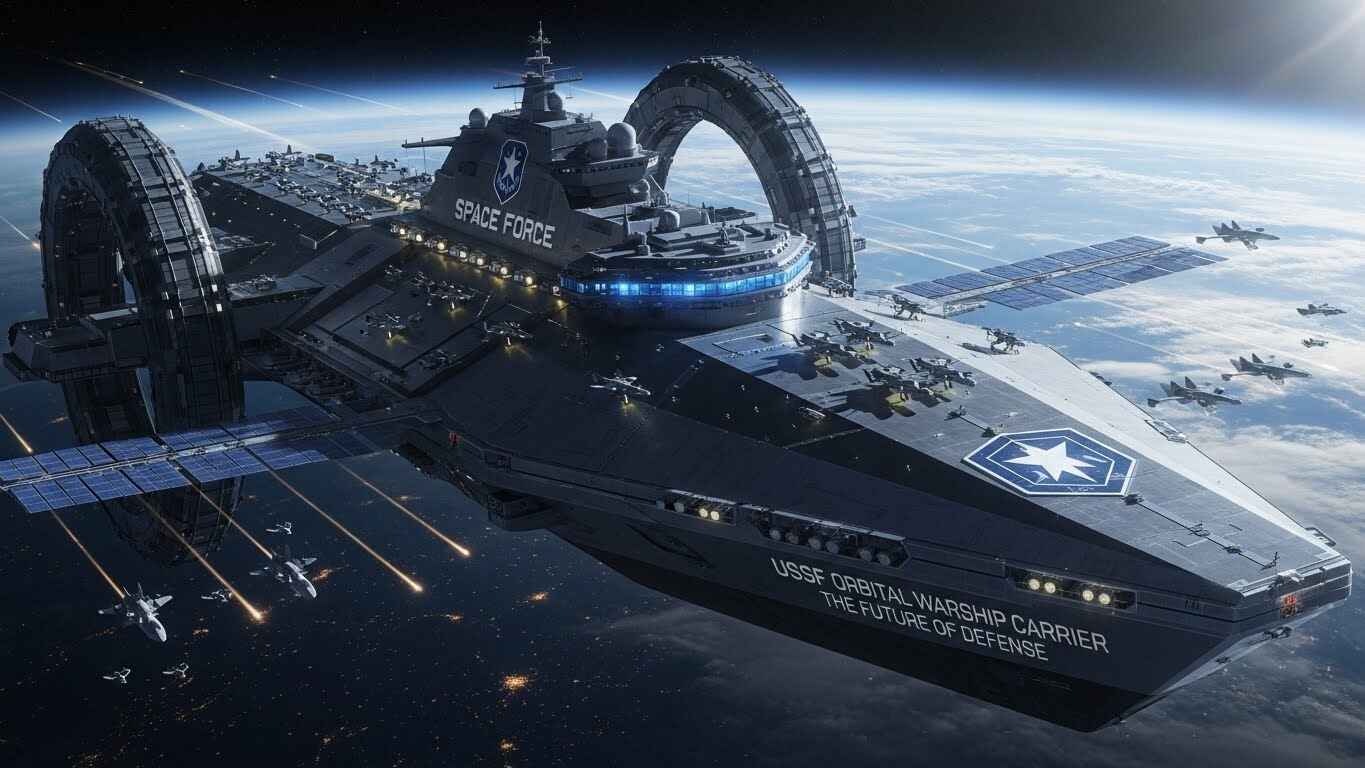
The world relies heavily on satellites for communication, internet, GPS navigation, banking, weather forecasts, and more. This makes space extremely important for national security.
A Space Force Orbital Warship Carrier helps protect these space systems by providing:
- Quick defense against threats
- A platform to launch orbital drones
- Surveillance of space activities
- Support for scientific and military missions
As more countries enter space, having a Space Force Orbital Warship Carrier becomes a major strategic advantage.
History and Origin of the Space Force Orbital Warship Carrier Concept
Early Science Fiction Inspiration
The idea of a Space Force Orbital Warship Carrier has existed in science fiction for decades. Movies, books, and video games imagined giant ships floating in space, launching fighters and protecting planets.
These fictional ideas inspired real scientists and military planners to explore similar concepts.
Modern Military Research
Today, several nations are researching orbital defense systems. While no fully functional Space Force Orbital Warship Carrier exists yet, early steps are being taken:
- Development of reusable spacecraft
- Creation of space surveillance networks
- Growth of space-based communication platforms
These advancements make the carrier concept more achievable than ever before.
Design and Structure of a Space Force Orbital Warship Carrier
Large Central Hull
A Space Force Orbital Warship Carrier would have a large, durable hull capable of surviving harsh space conditions.
It must protect its internal systems from solar radiation, extreme temperatures, and micrometeoroids.
Multiple Launch Bays
These carriers would include launch bays for:
- Orbital drones
- Small spacecraft
- Repair vehicles
- Surveillance units
Launch bays allow rapid deployment during missions.
Advanced Shielding Technology
Since there is no atmosphere in space, the carrier must rely on artificial shielding to protect against:
- Solar storms
- Space debris
- Directed-energy weapons
- High-speed impacts
Energy Systems
A Space Force Orbital Warship Carrier would likely use:
- Solar energy
- Nuclear reactors
- High-capacity batteries
These power systems ensure long-term operation without refueling.
How the Space Force Orbital Warship Carrier Works
Orbital Positioning
The carrier would stay in orbit around Earth or another celestial body. Its position allows it to quickly respond to threats and support missions.
Drone and Craft Launch Operations
A major feature of the Space Force Orbital Warship Carrier is its ability to launch space drones. These drones can perform:
- Reconnaissance
- Repairs on satellites
- Defense missions
- Quick movement to other orbits
Communication Systems
The carrier acts as a communication hub. It connects:
- Satellites
- Ground stations
- Space vehicles
- Defense networks
Artificial Gravity Solutions
Some designs include rotating sections to create artificial gravity to keep crew members healthy during long missions.
Role of the Space Force Orbital Warship Carrier in Space Defense
Protecting Satellites
Satellites are vulnerable to attacks or accidents. A Space Force Orbital Warship Carrier can quickly repair, shield, or defend satellites.
Supporting Space Missions
The carrier can help scientific, commercial, and exploration missions by offering:
- Maintenance
- Supply storage
- Emergency rescue
Monitoring Space Traffic
Space is becoming crowded. The carrier can track objects and prevent collisions.
Responding to Space Threats
Potential threats include:
- Anti-satellite weapons
- Orbital drones
- Cyber-attacks
- Space debris
A Space Force Orbital Warship Carrier acts as a mobile shield against these dangers.
Technology Behind the Space Force Orbital Warship Carrier
AI and Autonomous Systems
Modern space carriers will depend on artificial intelligence for:
- Navigation
- Threat detection
- Drone management
- System repairs
Hypersonic Interceptors
Some designs propose hypersonic interceptors that can defend against fast-moving objects.
Laser Defense Systems
Laser weapons could disable harmful satellites or protect the carrier from incoming threats.
Quantum Communication
This technology ensures secure communication without the risk of data interception.
Advantages of the Space Force Orbital Warship Carrier
Rapid Response Capability
The carrier can move quickly between orbits, providing immediate support during crises.
Global Coverage
Because it operates above Earth, it can observe and protect large areas without the limits of ground-based systems.
Long-Term Operation
A Space Force Orbital Warship Carrier can stay active for years with proper power systems.
Enhanced Deterrence
Its presence alone may discourage hostile actions in space.
Challenges of Building a Space Force Orbital Warship Carrier
High Costs
Building such a massive spacecraft requires huge financial investment in research, materials, and development.
Complex Technology
Creating advanced shielding, propulsion, and weapon systems is extremely challenging.
Space Debris Risk
The carrier must operate in a space environment filled with debris moving at high speeds.
International Regulations
Space is governed by laws and agreements. Using a Space Force Orbital Warship Carrier for military purposes must follow these rules.
Future of the Space Force Orbital Warship Carrier
Expansion of Space Militaries
More countries are expected to develop space forces, increasing the chances of orbital carrier projects.
Larger and More Advanced Carriers
Future carriers might include:
- Larger drone fleets
- Better energy systems
- Stronger defense shields
Support for Moon and Mars Missions
A Space Force Orbital Warship Carrier could protect missions traveling beyond Earth.
Collaboration Opportunities
Space may encourage cooperation between nations for safer operations and shared missions.
Will Space Force Orbital Warship Carriers Become Reality?
The concept is still in development, but all signs point toward it becoming possible in the future. As technology improves, the idea of having a Space Force Orbital Warship Carrier in orbit becomes more realistic.
While it may take decades to build, its influence on space security and exploration will be huge.
Conclusion:
The Space Force Orbital Warship Carrier represents the next step in space defense. It combines advanced technology, strategic importance, and futuristic design to protect satellites, support missions, and maintain peace in orbit.
As nations embrace the future of space, carriers like these may become essential tools in securing humanity’s presence beyond Earth.





Leave a Reply